A quiet and misty forest setting.

GREAT APES

Four Species. One Family.

OUR WILD RELATIVES

The Great Apes, ranging across the forests of Africa and Southeast Asia, are a small group of remarkably intelligent species that include gorillas, chimpanzees, bonobos and orangutans. Humans also belong to the family, Hominidae, sharing deep evolutionary roots and behaviors that echo across forests and continents.

Each species carries its own story, yet all share traits that define the great apes: high intelligence, emotional depth, long childhoods, the use of tools, opposable thumbs and grasping toes, and the ability to pass knowledge and culture between generations.

Together, they represent some of the most complex and expressive life on Earth.
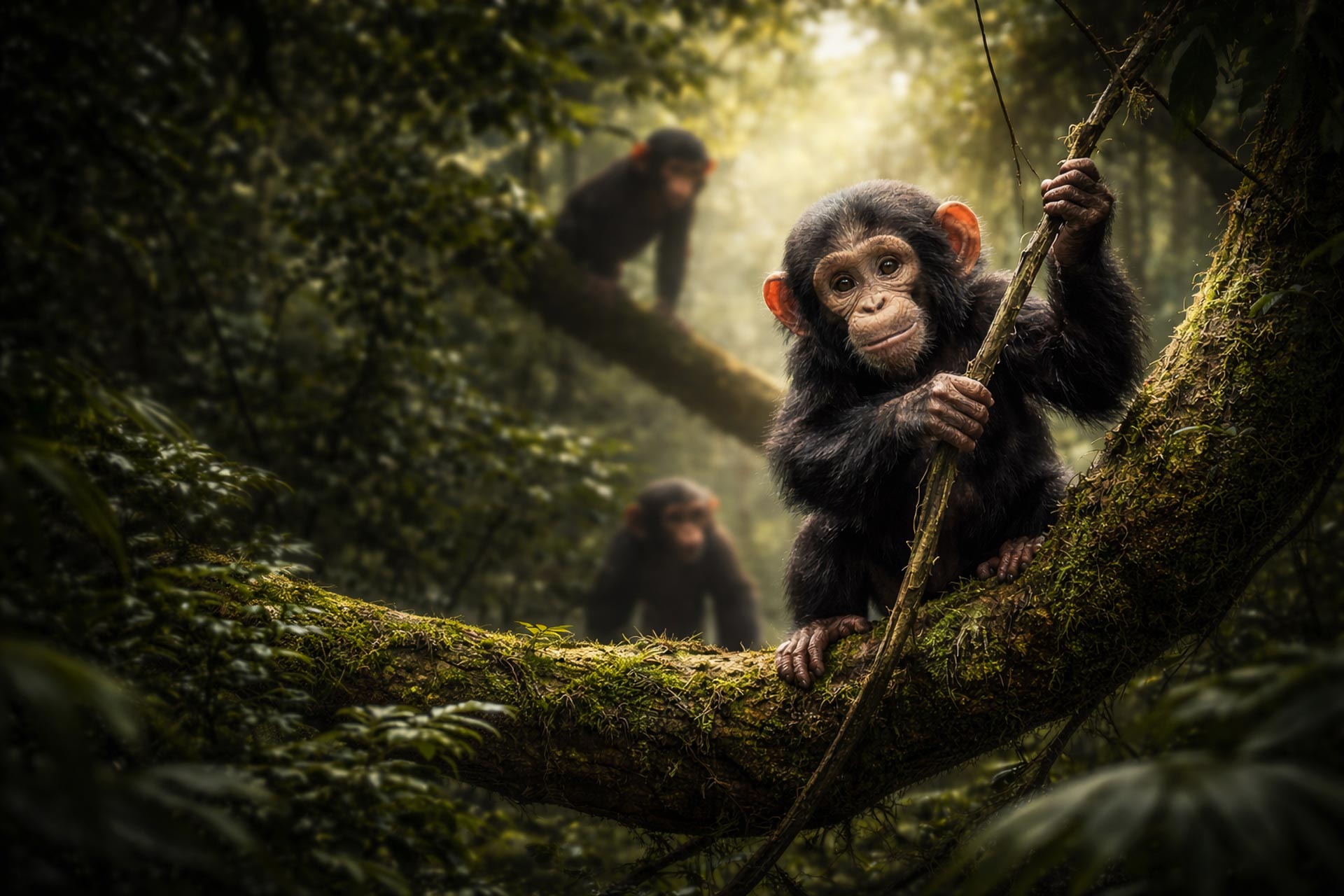
A young chimpanzee plays in the trees while more toddler chimpanzees are playing in the background.

CHIMPANZEE

Species: Pan troglodytes
Subspecies: Central, Eastern, Western, Nigeria-Cameroon
Conservation Status: ENDANGERED
Chimpanzee range map of central Africa

Chimpanzees are among the most intelligent and socially complex animals on Earth. Found across the forests and woodlands of West and Central Africa, they live in dynamic communities, form alliances, use tools with remarkable sophistication, and display a wide emotional range. Their behavior offers a window into our own evolutionary past, revealing both cooperation and conflict, creativity and culture.

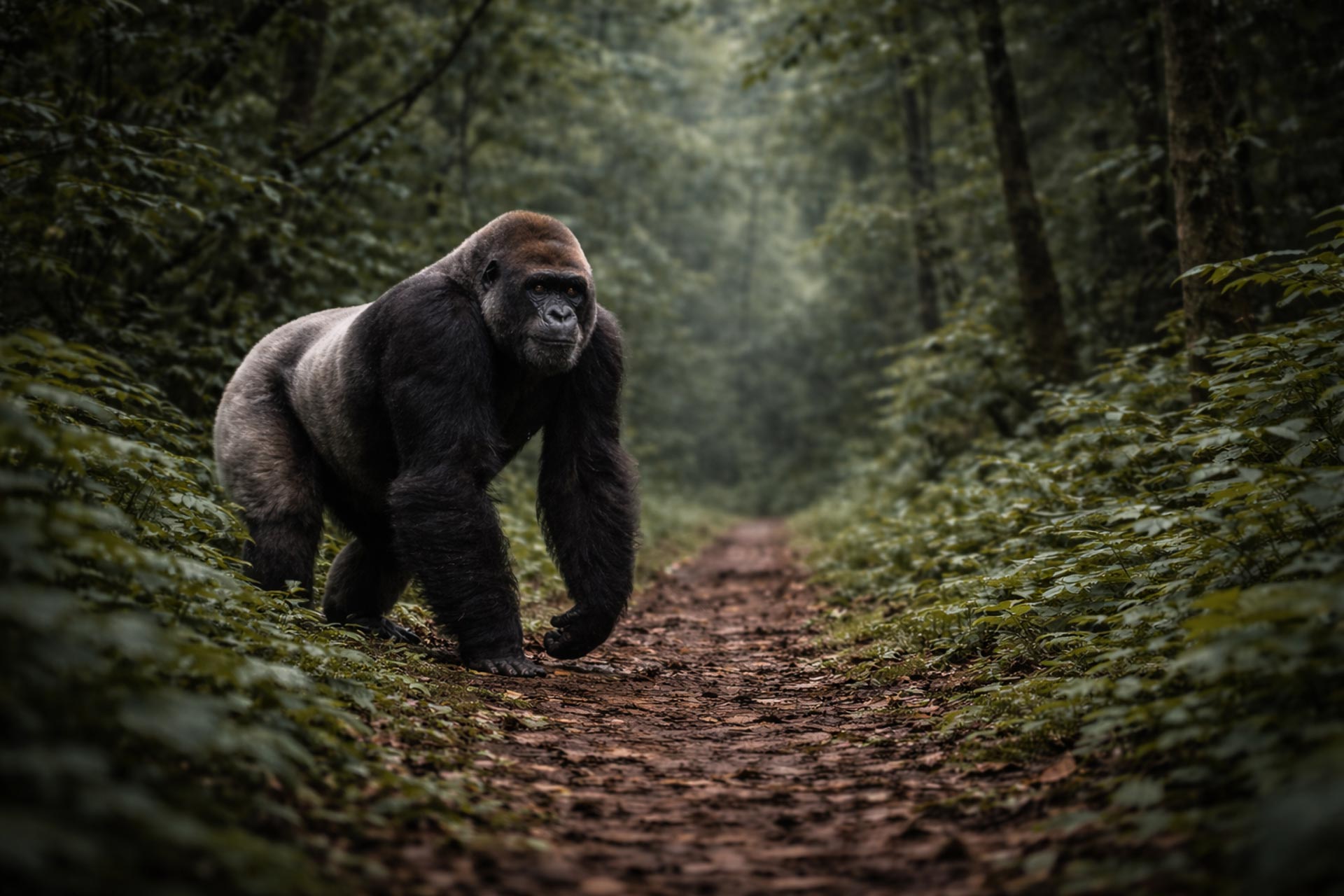
A male silverback gorilla roams the forest.

GORILLA

Species: Western gorilla; Eastern gorilla
Subspecies: western lowland, Cross River (Western); mountain, Grauer's (Eastern)
Conservation Status: CRITICALLY ENDANGERED
Geographic range map showing gorilla habitat in central Africa

Gorillas are the largest of the great apes and among the most gentle, socially expressive animals in the world. Found throughout the lowland rainforests and mountain forests of Central Africa, they live in close-knit family groups led by a dominant silverback male. Despite their immense strength, gorillas are peaceful, plant-focused foragers whose daily lives revolve around family bonds, quiet communication, and the rhythms of the forest. Their behavior—calm, cooperative, and deeply relational—reveals a side of great apes often overshadowed by myths of aggression. Instead, gorillas embody patience, emotional depth, and remarkable parental care.

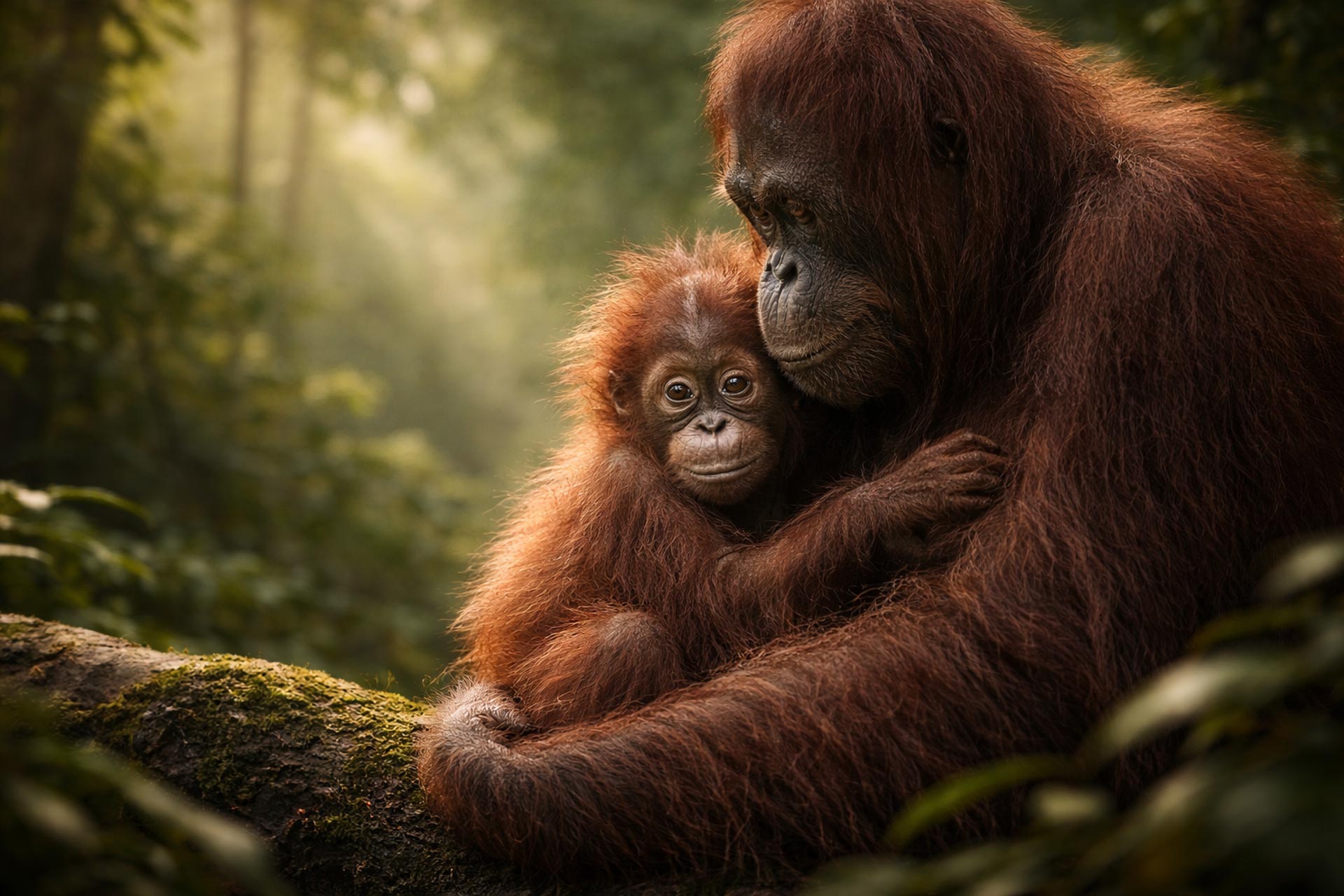
An infant orangutan is embraced by their mother while sitting in a lush, green forest.

ORANGUTAN

Species: Pongo spp.
Subspecies: Bornean, Sumatran, Tapanuli
Conservation Status: CRITICALLY ENDANGERED
Range map of Orangutan habitat in Borneo and Sumatra

Orangutans are the great apes of Southeast Asia’s rainforests, known for their striking red hair, deep intelligence, and solitary grace. Living high in the canopies of forests in Borneo and Sumatra, they spend most of their lives among the trees—moving thoughtfully through the branches, building fresh nests each night, and foraging for fruit, bark, and leaves. Their slow, deliberate movements reflect a life adapted to the forest, where strength, gentleness, and careful problem-solving guide their daily survival. More than any other great ape, orangutans embody patience, introspection, and a profound connection to their forest homes.

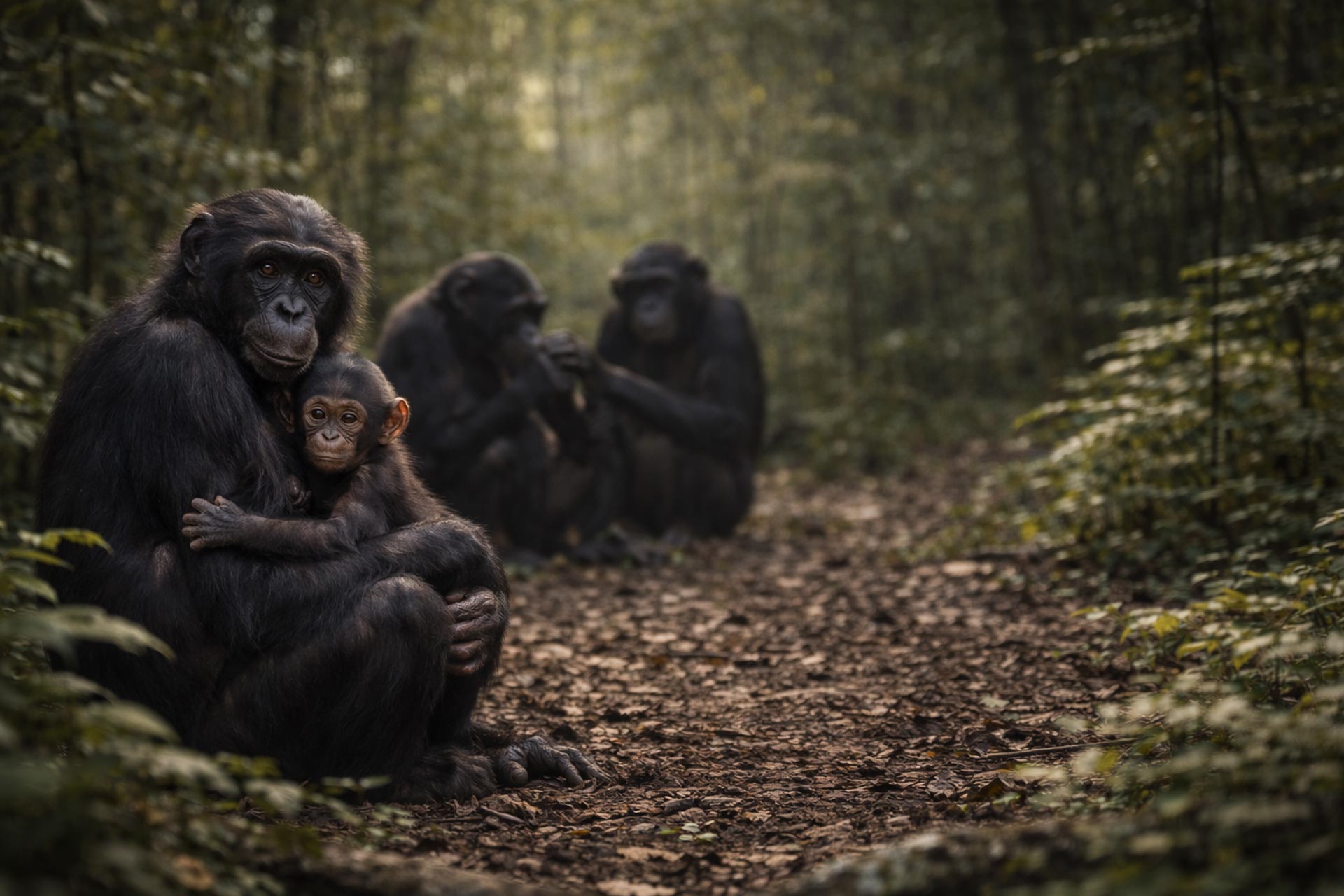
An infant bonobo is embraced by their mother while sitting in the forest and other bonobos groom each other in the background.

BONOBO

Species: Pan paniscus
Subspecies: None (monotypic species)
Conservation Status: ENDANGERED
Geographic range map showing the bonobo habitat in central Africa, Democratic Republic of Congo

Bonobos are the most peaceful and socially attuned of the great apes, living in the dense rainforests south of the Congo River in the Democratic Republic of Congo. Known for their expressive eyes, graceful movement, and strong emotional bonds, bonobos form societies built on cooperation, play, and compassion. Their communities are led by females, shaped by close friendships, and maintained through constant social grooming and shared food. Thoughtful, curious, and deeply communicative, bonobos offer a glimpse into an alternative path of primate evolution—one rooted in empathy, conflict avoidance, and connection.

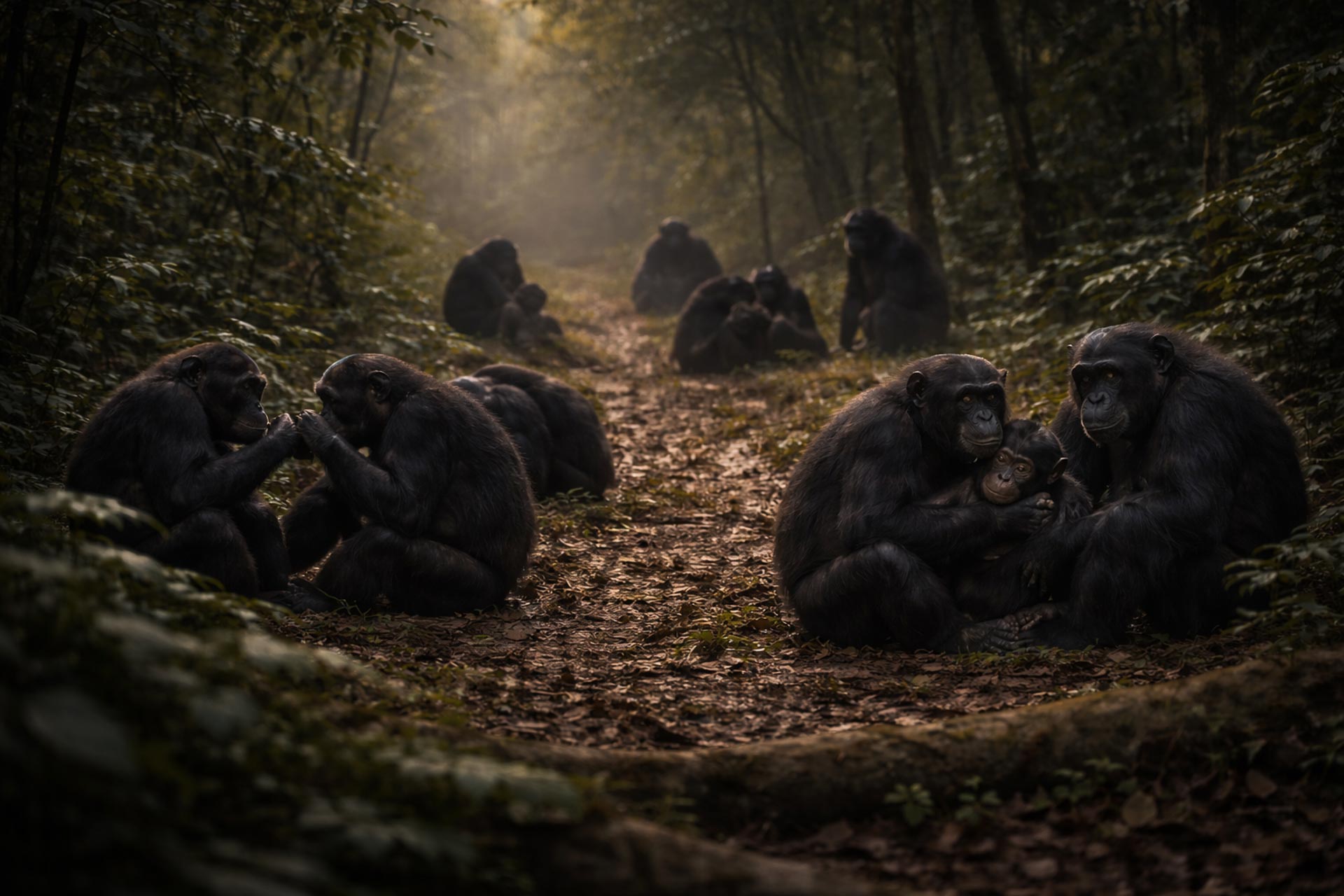
A group of chimpanzees sit and socialize while grooming each other.

PLIGHT of the GREAT APES

All Great Apes are endangered, some even critically endangered, due to habitat loss, poaching, and the illegal pet trade.

Great Apes were also once used in biomedical research. Thankfully, in 2015, legislation was finally passed to end and illegalize invasive biomedical testing on Great Apes. Since then, sanctuaries have been making efforts to rehome remaining individuals to their facilities where they can live out their lives in peace.

While television and film production once used real great apes and primates in their projects, it is now considered largely unethical and most productions rely on Computer-Generated Imagery (CGI).

Sanctuaries rescue great apes from many different circumstances, including the illegal pet trade, entertainment industry and biomedical research programs. Zoos provide education, conservation breeding, and can also rescue apes in need. The threats are serious, but there is hope.

A misty and dark forest setting.

SANCTUARIES

ZOOS

Overlooking a misty forest canopy

WATCH

READ

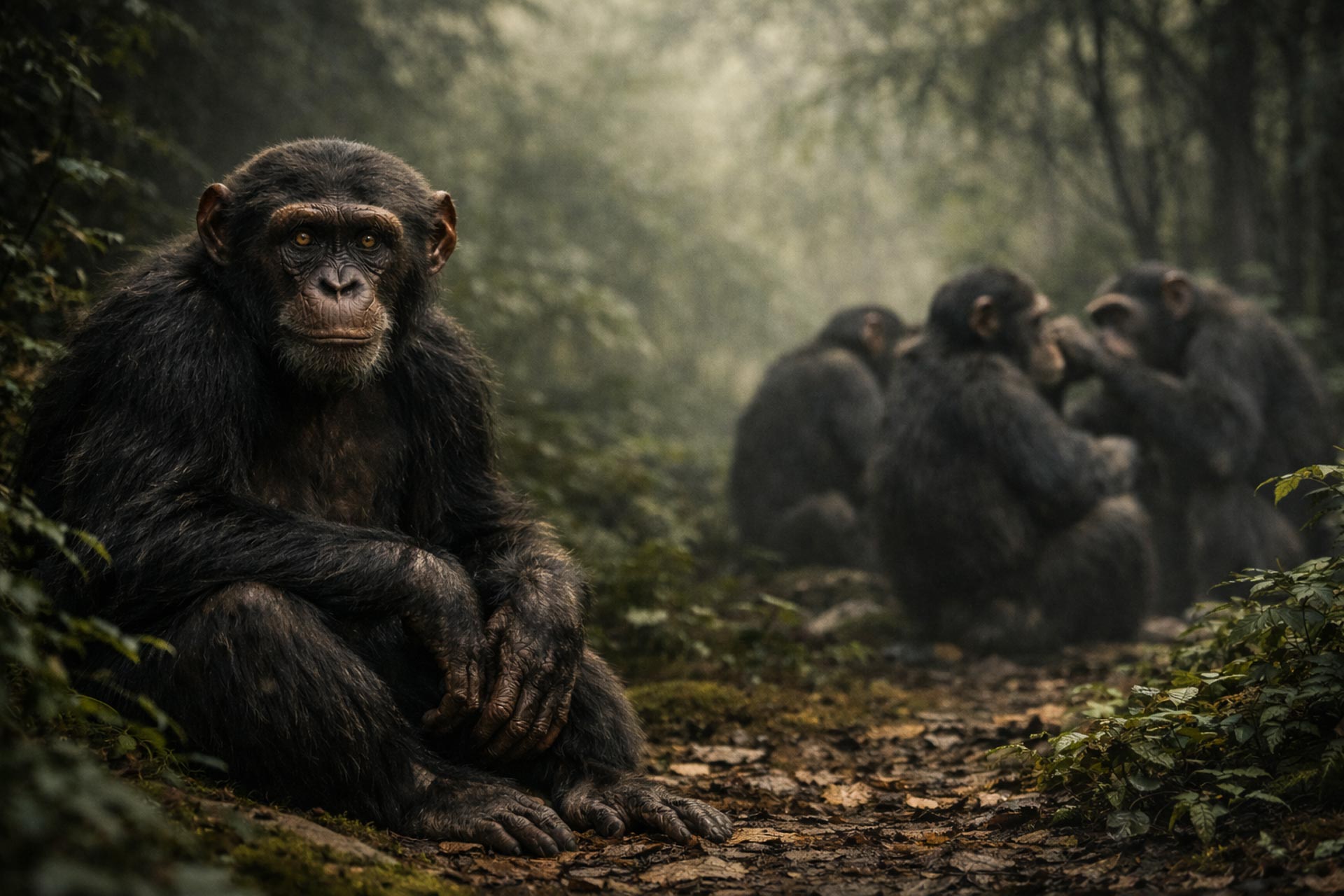
A male chimpanzee looks back at the viewer as he is calmly sitting in the forest and other chimpanzees groom each other behind him.

HOW TO HELP

Education: the story of the great apes and their plight is important.

Shop FAIRTRADE whenever possible (especially with products like chocolate, coffee, bananas, and palm oil) to support sustainable farming, and prevent deforestation and habitat destruction.

Visit and support only AZA - accredited zoos. Zoos without AZA accreditation may not have the highest standards for animal welfare.

Many sanctuaries have volunteer opportunities: CENTER FOR GREAT APES, CHIMP HAVEN, SAVE THE CHIMPS, CHIMPANZEE SANCTUARY NORTHWEST, PROJECT CHIMPS

In addition to volunteering, donations and wishlist purchases are a wonderful way to support sanctuaries. Please view their websites to learn how to get involved.  

Avoid purchasing greeting cards that feature pictures of real great apes 'smiling' or wearing costumes. What may look like a smile is actually considered a 'fear grimace' and indicates an ape experiencing fear, submission and anxiety.

Keep up to date with new legislation that protects great apes and support change when you can - The Captive Primate Safety Act of 2025, which attempts to prohibit the private possession of non-human primates, was introduced in the U.S. House of Representatives on May 5, 2025. Share your support and stay updated through the Chimp Haven Sanctuary.

Thank you for visiting and for your interest in our wild relatives, the Great Apes.
Back to Top